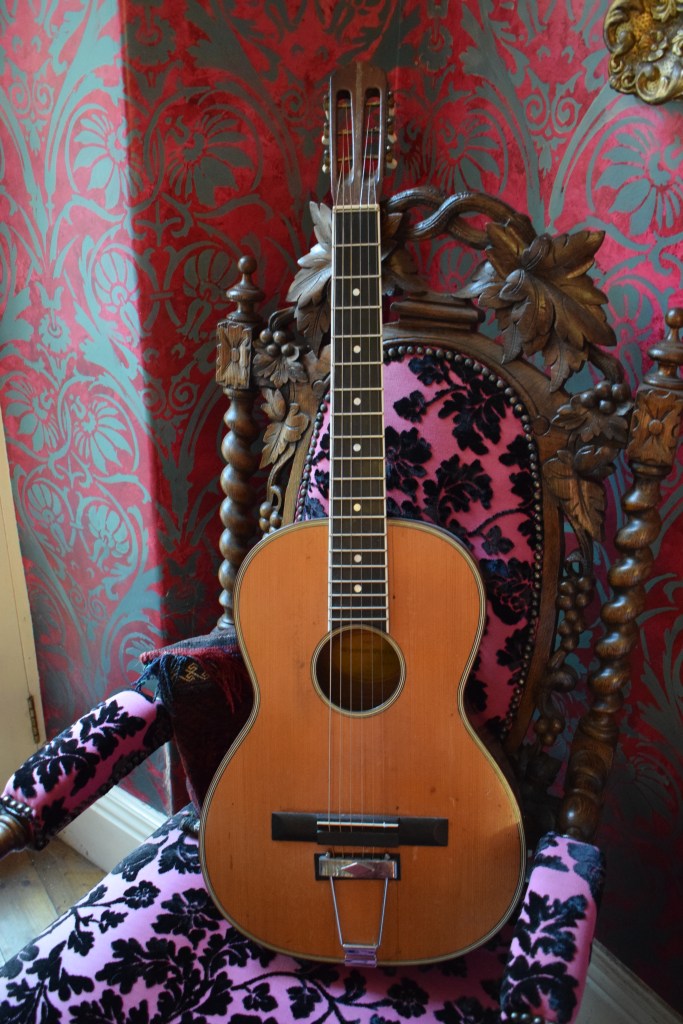
My grandfather played guitar and banjo in bands in the 20s and 30s and when I used to visit as a child he would often get a guitar out and play, usually something classical. He had 2 guitars and a banjo and when he got older he passed these on to me along with loads of music from the 20s and 30s including Wagner Operas scored for the banjo, yes really! These instruments included a Spanish classical guitar, a Windsor guitar from the 1930s and a Windsor banjo. The Windsor guitar factory was based in Birmingham and was destroyed in the war, I think I am right in saying the basic guitars were made in Spain and finished of in Birmingham. This Windsor guitar has a very, very nice tone and any time I play any other acoustic guitar I am left unimpressed, others have also commented on it’s tone, I think there must be something in old wood and guitars which have been played substantially developing some kind of resonance, It’s a very special instrument to me. I acquired another smaller Windsor guitar of ebay some years back, stripped it down, revarnished and refretted it, this was the first instrument I refretted. One amusing element of this guitar is that the wood grain on the sides is actually not real but painted, it’s painted very convincingly except that whoever painted it painted in some enormous knots in the grain. I have also refretted and renovated the banjo including a new skin. I hardly ever play the banjo. I also have a few other guitars and instruments.

I took to making guitars a few years ago. I had a broken old mahogany bed and it occurred to me that rather than throw it out, the wood would be just right for making guitars. The first one I made has a floyd rose trem, humbuckers, ebony fingerboard, walnut burl veneer and tortoise shell binding, mother of pearl dots on the neck and side dots done with glow in the dark powder in epoxy and finished with french polish. It plays the way I wanted, though the neck could do with being slightly wider as the high E is a little bit close to the edge.

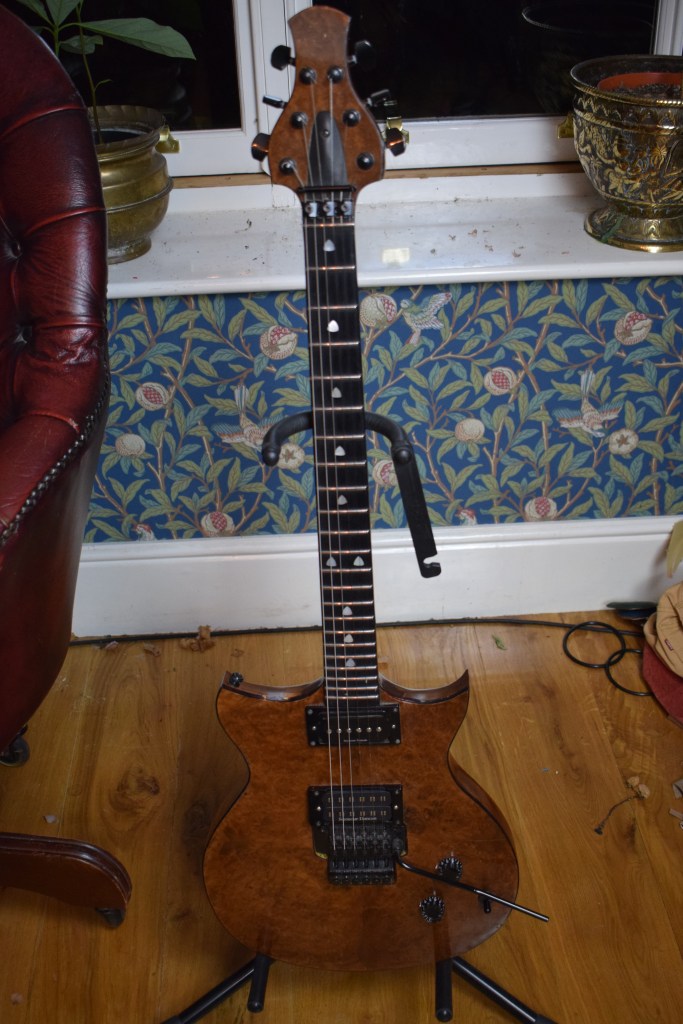
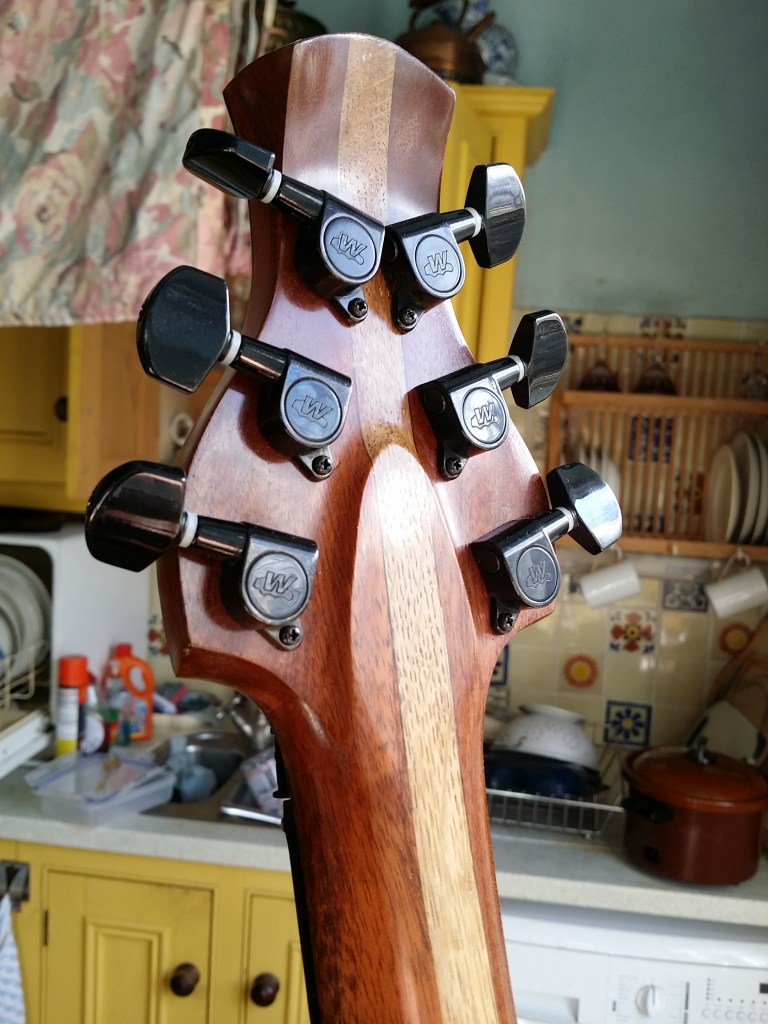
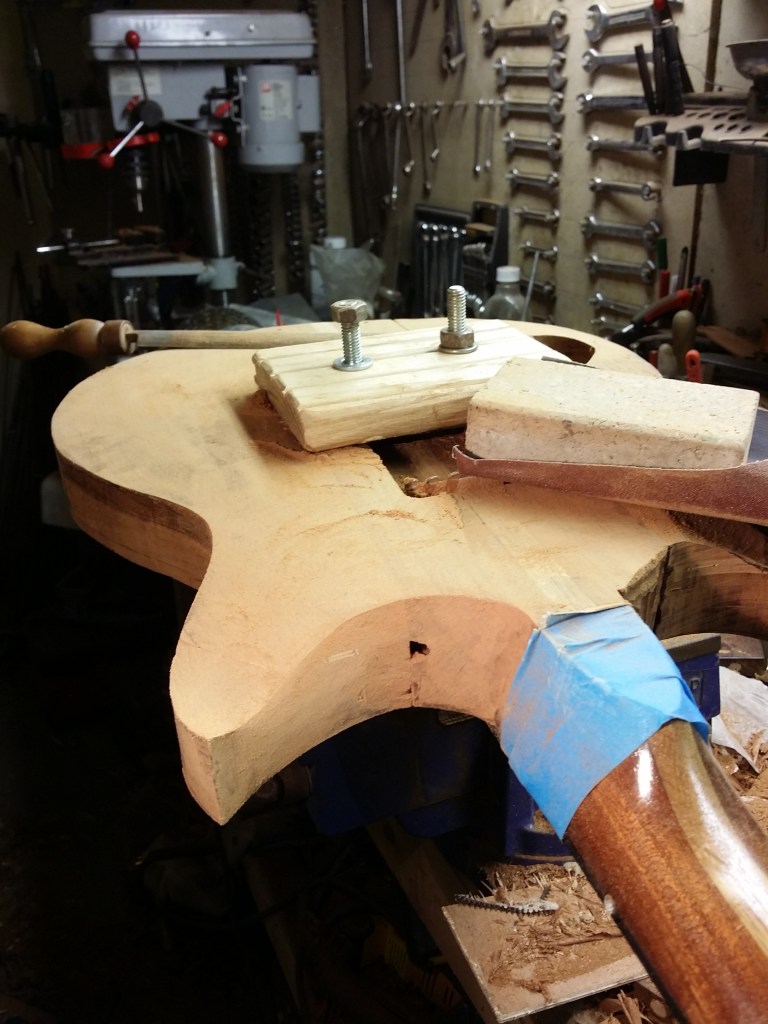

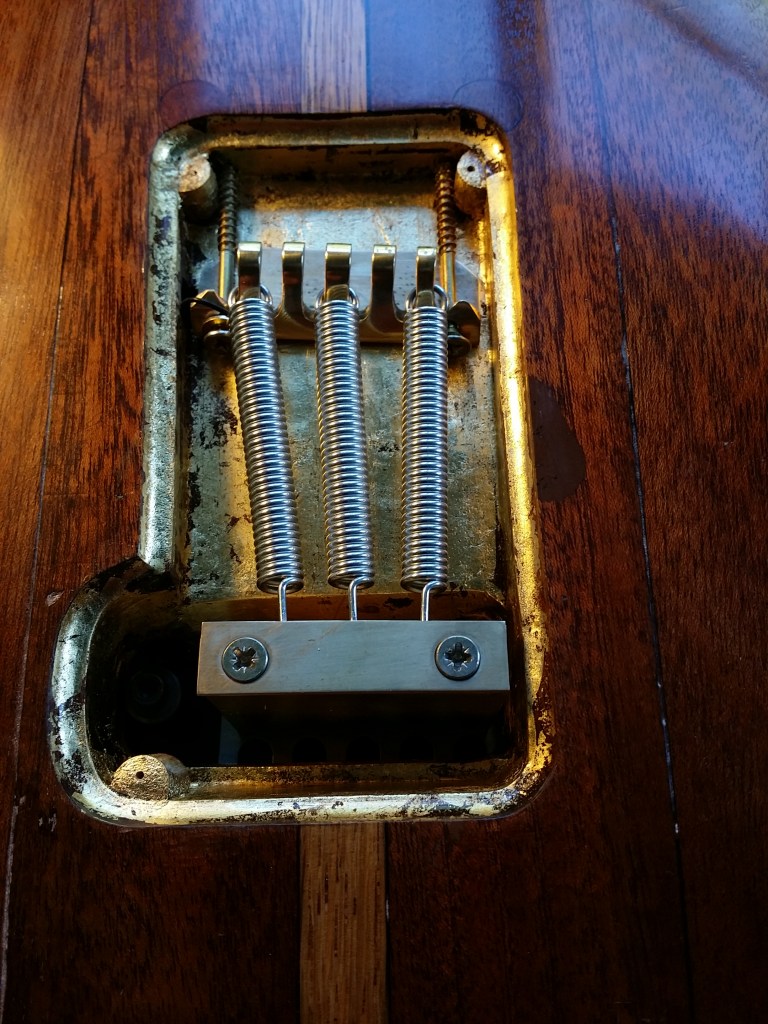
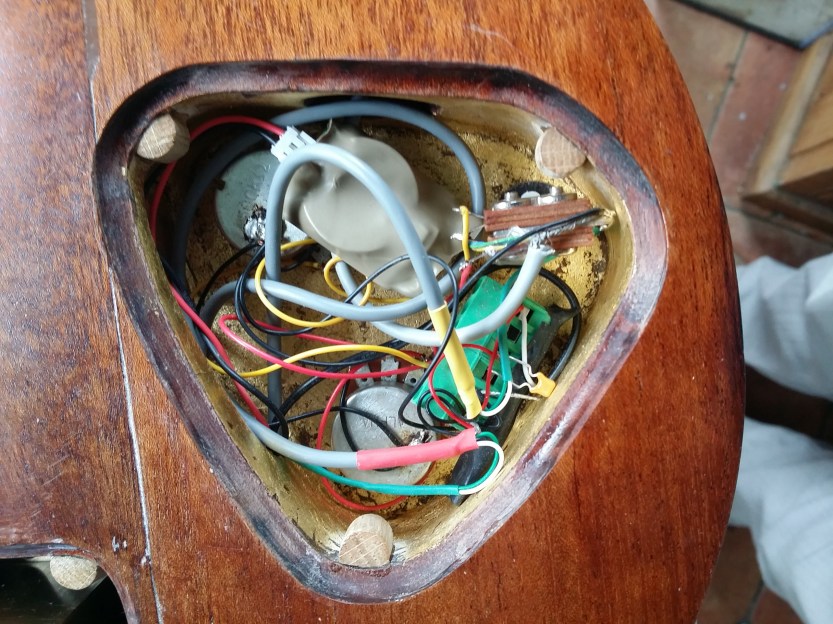
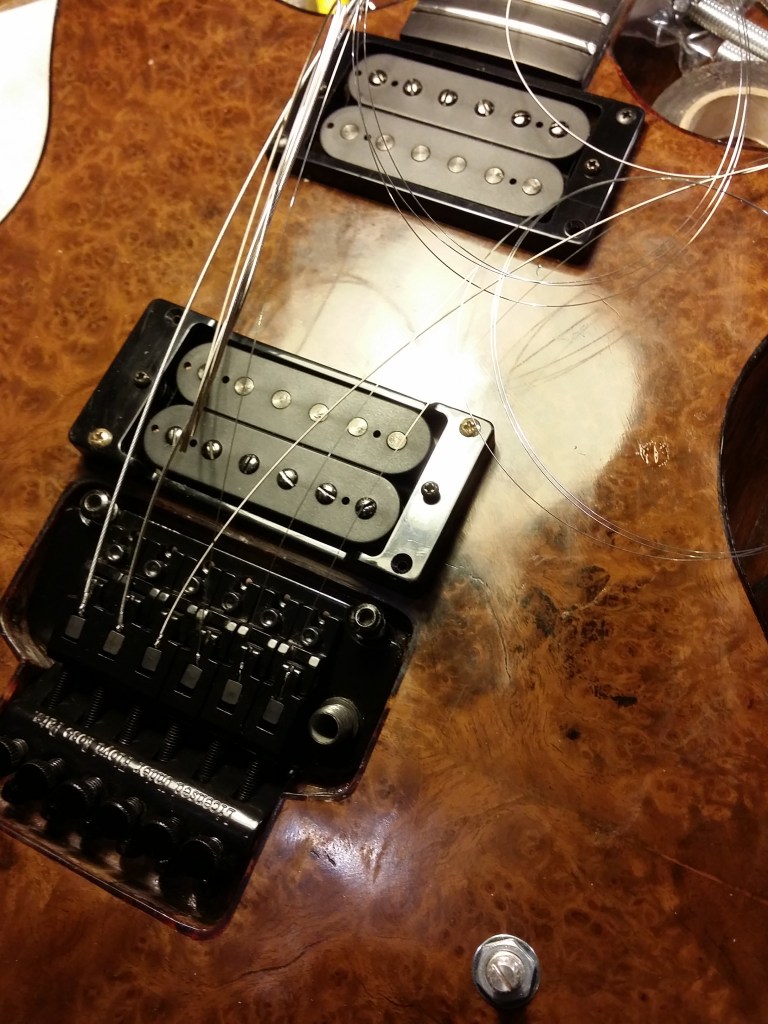
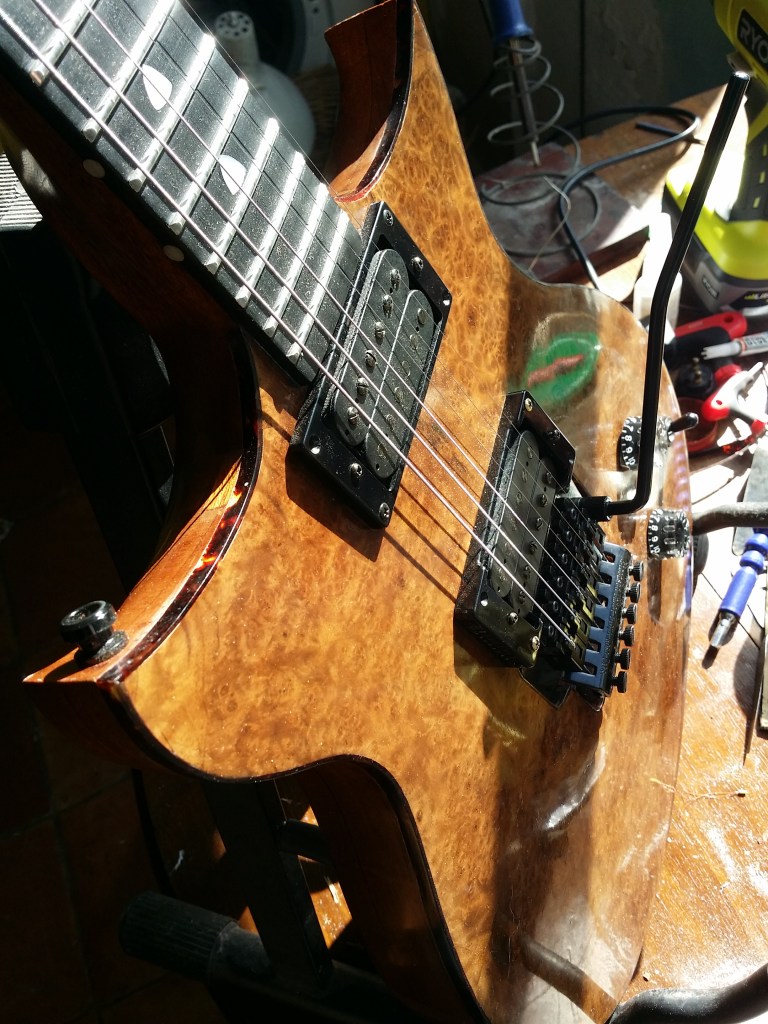
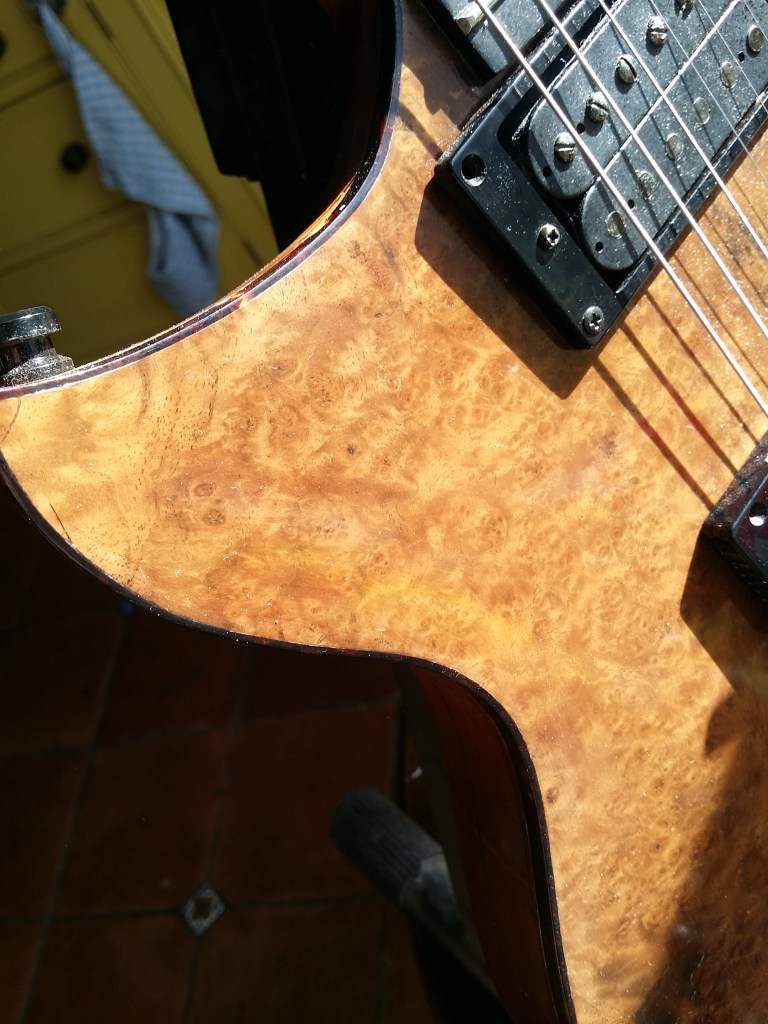
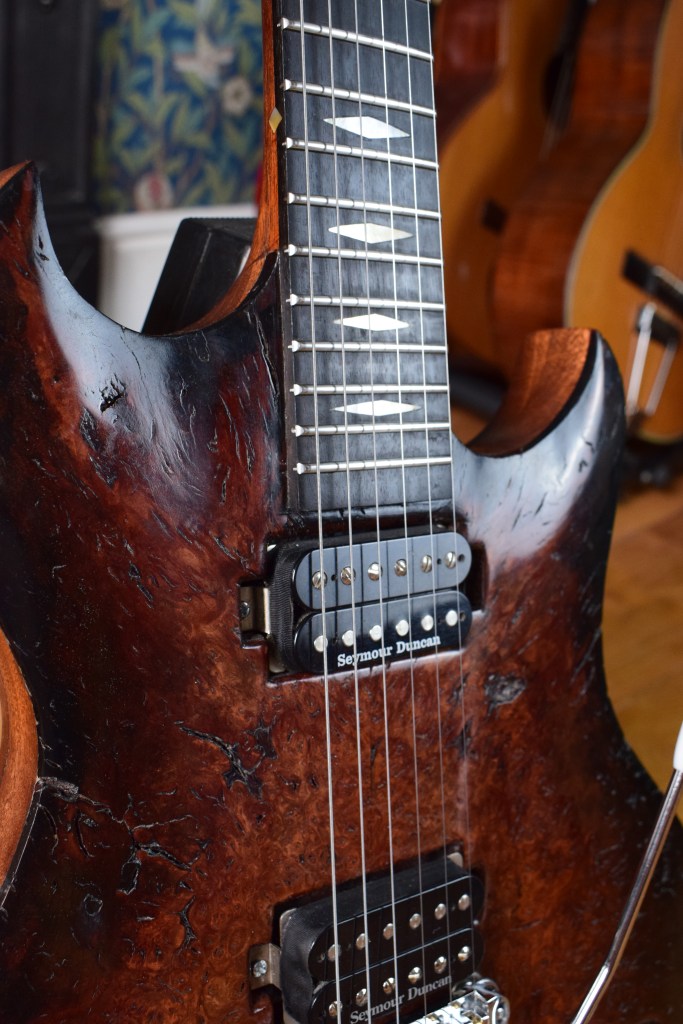
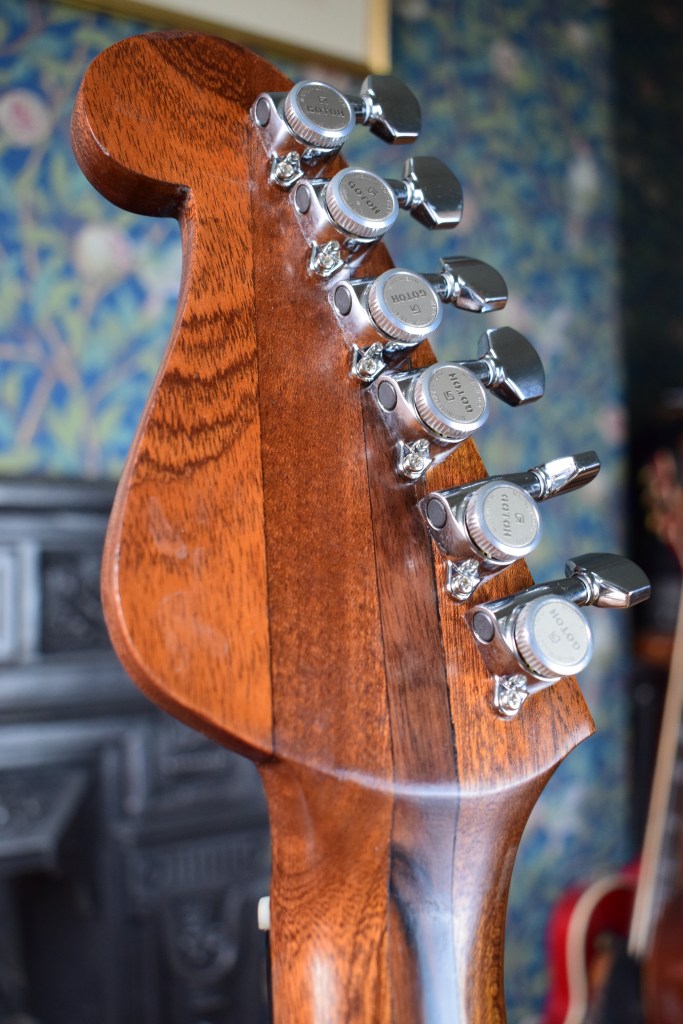
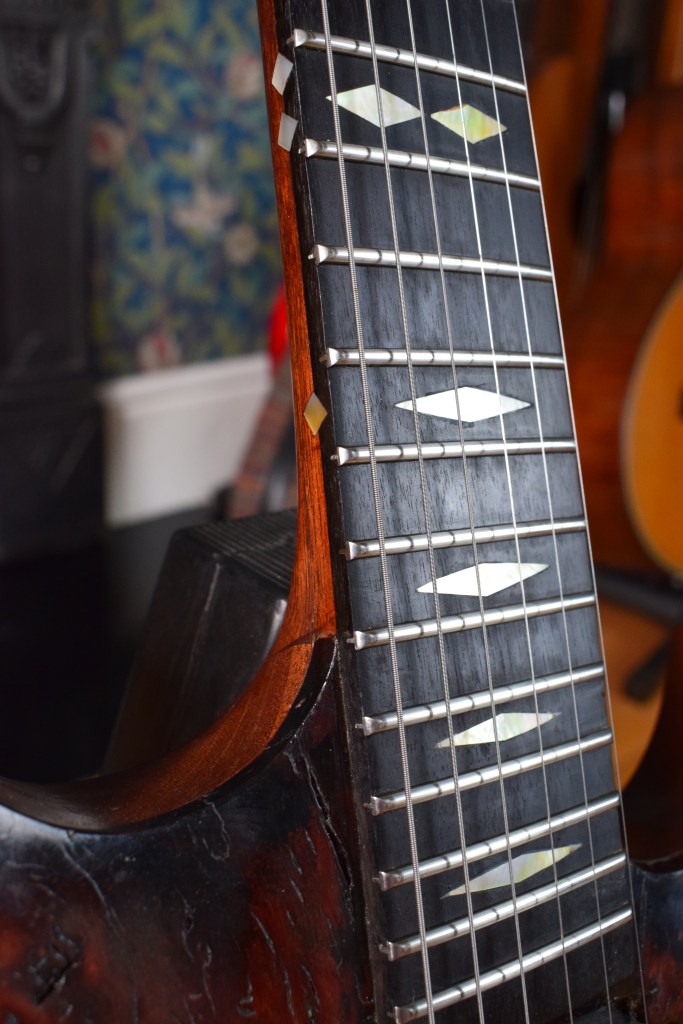
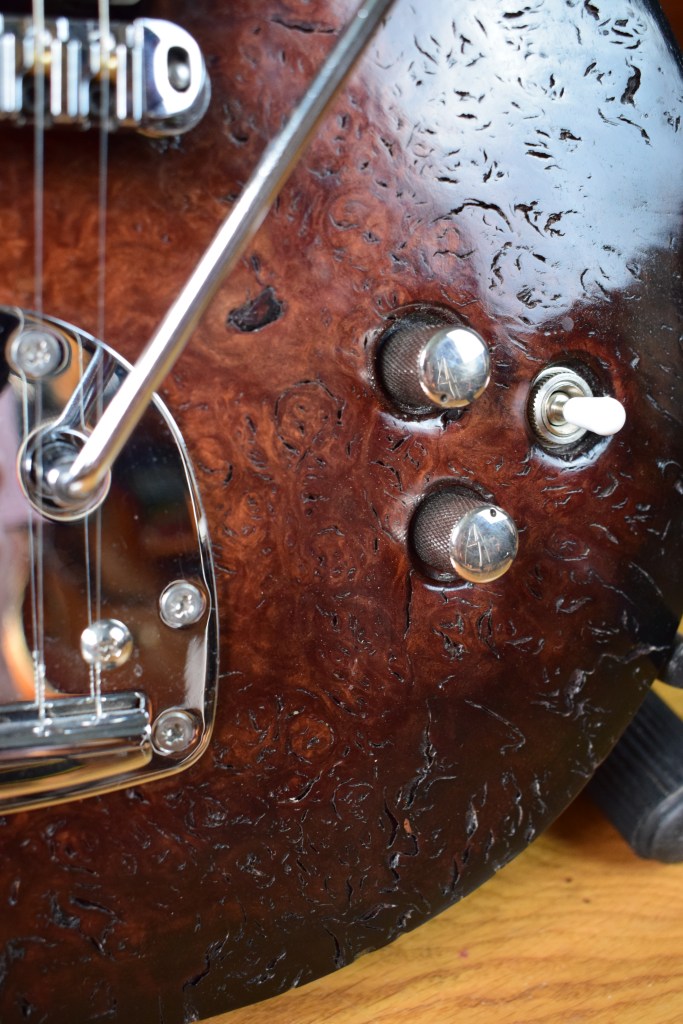
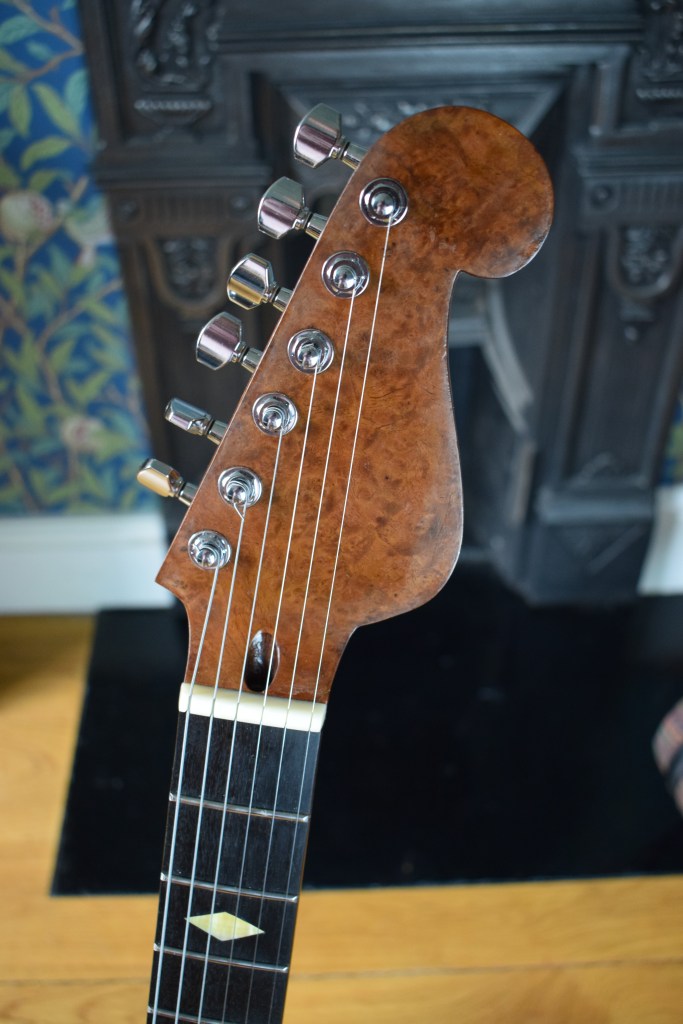
For the next guitar I took care to design every detail carefully before I started since with the previous one I had sort of made things up as I went along a bit. This second guitar was using up the rest of the old mahogany bed, the top of a mahogany coffee table I got from an antique shop and also some wood that I got from a fantastic exotic wood specialist based at a Shropshire farm – https://exotichardwoodsukltd.com/ , so this one has a very nice burl top, three piece through neck combining mahogany and ebony, it’s chambered, has a jaguar style trem, humbuckers, I made diamond shape mother of pearl fretboard markers, again finished in french polish. This is currently my number one electric guitar. Both guitars have super jumbo stainless steel frets which I really like, when they are really polished up the strings slip over them really nicely with bends and your fingers hardly touch the fretboard.

There are two other guitars which I renovated. One is a Japanese hollow body electric sort of based on a Gibson 335, which I am pretty sure is from the early 1970s. It has an etched plastic sticker on the headstock and had another next to the controls, saying ‘Suzuki’, I think it is possibly original. As I understand it, at that time there were a lot of companies, particularly in Italy but also Japan making this style of guitar as there was a lot of demand for them. It doesn’t seem to have any serial number. I gave it a refret and I put on my favourite stainless steel super jumbo frets on. Also, the switches and pots were completely worn out and mounted on tortoise shell pickguard plastic, I remade this replacing the rocker switches, which were totally done in, with toggle switches. It has a rather odd electrical configuration with two pickup selector switches and a third switch which turned out to be a high pass filter and a tone pot low pass filter, two single pickups and a nice sensitive trem.

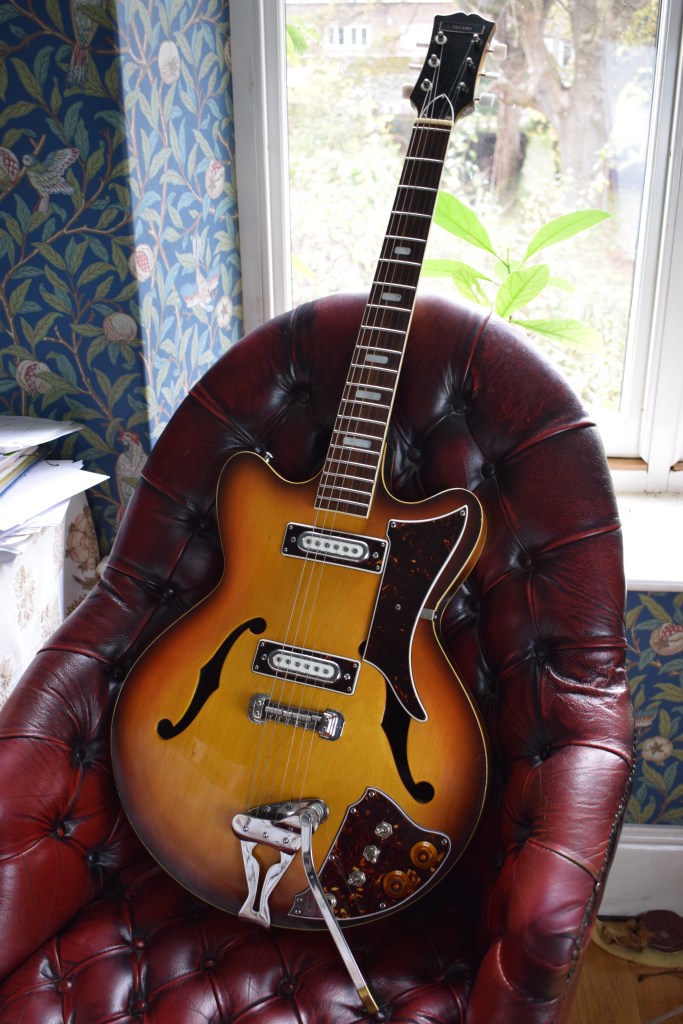
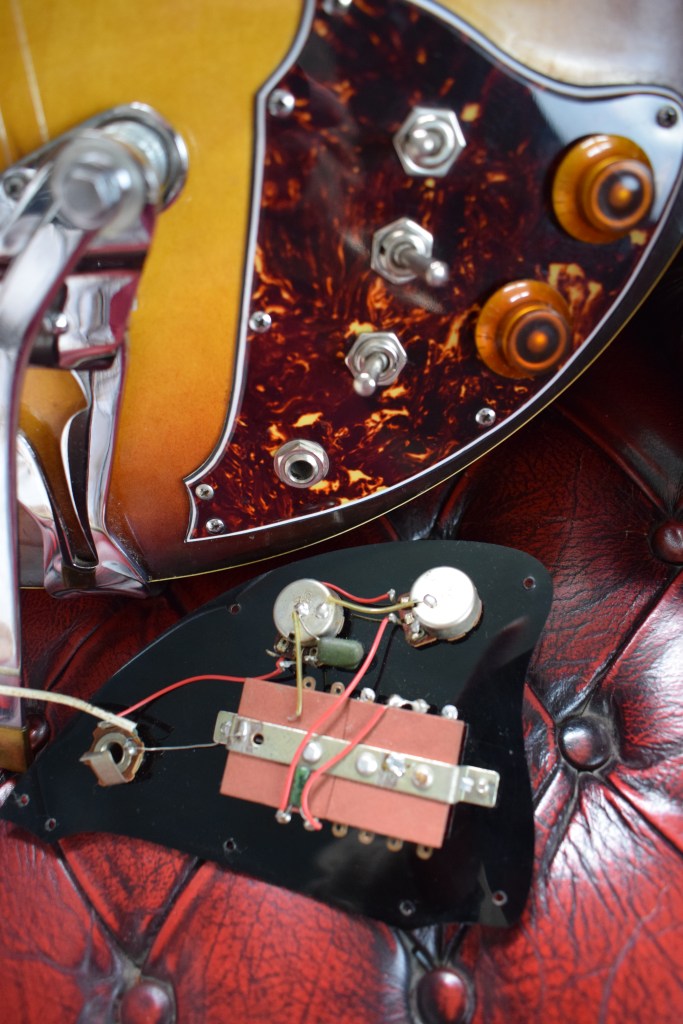

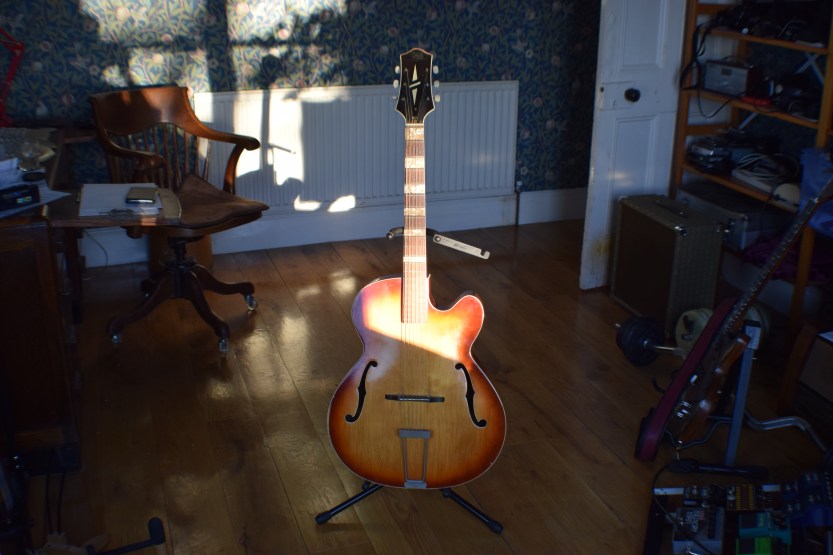
The other guitar an archtop which is badged as Zenith. These were made by Framus in Germany for the British market. It has a serial number which dates it to 1960. I got this from an antique centre paying £160, which I thought was a very good price. It was in a little bit of a sad condition but basically sound, you could see it had been gigged quite a lot, there are marks where a capo had been positioned and the pick had taken a small chunk of the binding of the fret board. It didn’t have any electrics and didn’t look like it ever had. The pickguard and truss rod cover were missing. Also, the bridge was very worn. I refretted it, made a replacement bridge just the same as the original but out of a scrap of ebony I had and installed a piezo pickup under the bridge. I also had some left over tortoise shell plastic so I made a pickguard to hold the controls and also a truss rod cover. In addition to the piezo I installed a Kent Armstrong pickup. The way I decided to set the electrics to work is to have volumes for each pickup and a toggle switch to switch between stereo and mono output and a strap nut jack. I play this guitar a lot, though mostly acoustically.

 Anphortas